
|
When you purchase through links on our site, we may earn an affiliate commission. Here’s how it works. |
Over the last little while I have been going down some historical digital camera development rabbit holes. I have been around for most of the evolution of digital ILC cameras when I started out with the 300D in 2003. This website has also contributed to perhaps knowing more than one should about Canon camera models over the decades.
What stood out to me is how many market shifting cameras and technologies Canon has released since 2000. The internet constantly says that Canon “doesn’t innovate”, when all they have done since the launch of EOS in 1987 is innovate. Maybe when you do it so often in ways that don’t appear in simple marketing material, people don’t register what they have done.
Sony led the move to the full-frame mirrorless cameras in 2013, and the world is grateful for it. Canon didn’t realize how the market was about to change, which can happen when you’re the one at the top of the hill and Ego can get the best of you. That all changed in 2018 when Canon launched the RF mount and more so in 2019 with the arrival of the EOS R5 and EOS R6.
Since then, Canon has continued to move technology and design forward. They continue to be the #1 manufacturer of cameras.
The List Philosophy
When you make a list like this, bias will come into play. There are a few cameras here that led me down the photography path and were the tools that advanced my abilities and love for photography.
The list here is a combination of impact on the market, the launch of new technologies and mixed with some nostalgia. There is one camera here that has never appeared on any list of this kind, and probably never will again. It was a camera that intrigued me a lot at the time with a major technological innovation.
Maybe it’s not a list of the best, but a list of the most important in my eyes, even if their importance wasn’t known at the time.
The list is in no particular
Canon EOS 5D Mark II

What can we say about the EOS 5D Mark II? This may be the most impactful digital camera ever released that shaped the entire industry after it.
When the EOS 5D Mark II was announced back in September of 2008, a promotional video camera along with it. The “Reverie” short by Vincent Laforet blew the camera world away. It changed everything in the marketplace.
This was the first EOS camera with video capabilities. Not just capabilities, but it was professional quality 1080P output for the time. This camera was used to shoot an entire episode of “House” and countless other professional productions.
Canon had no idea how revolutionary this camera was in the marketplace. In June 2019. Canon released their first firmware update to make the camera an even better tool for video production. If you recall, you couldn’t adjust aperture, shutter or ISO manually. when shooting video. There was a major firmware released targeted at giving more features and control for video production. The following year Canon added 24p/25p framerates/
This may be a camera that with some cultural significance as well. From YouTube to independent filmmakers, Canon released a tool that people took to the next level and began their journey into new a interesting content and expression.
No fanboy here; No single digital camera has had as big of an impact on the market, period.
Canon EOS Rebel 300D

The Canon EOS Rebel 300D was the first digital SLR camera to be priced under $1000 USD at $999 when it launched in August of 2003. The EOS Rebel 300D was one of the most important digital cameras ever released. It brought the DSLR to the masses. This was the Canon AE-1 for the digital world.
Film shooters took notice and the transition to mass market digital ILC cameras was now underway.
The EOS Rebel 300D also saw the introduction of the EF-S mount. These were the first lenses designed for APS-C sensor digital cameras. You could mount and use some EF-S lenses on full-frame EF cameras by taking off the rear piece of plastic. Only nerds like me every did it. I will say that using the brilliant EF-S 10-22mm f/3.5-4.5 on a 5 series camera was fun.
There was also another bonus that came later down the road. Internally the EOS Rebel 300D was pretty much the same as the much more expensive EOS 10D. Someone figured out how to get the firmware off the 10D so you could install it on the 300D.
As far as specifications? It didn’t matter at the time. Consumers were aware of DSLRs, and now they were accessible financially for a lot more people.
This was my first DSLR, and it helped me produce a whole pile of terrible images, but I was all-in at that point.
Hats off the EOS 300D.
Canon EOS R5
Canon was late to embracing the full-frame mirrorless camera world. They did have the APS-C EOS M system. That system took a few years to compete with the other mirrorless systems available.
Canon released their first full-frame mirrorless camera with the EOS R in 2018 and followed it up with the EOS RP in 2019. Both cameras were what I’d call “stop-gap” products. Both cameras borrowed from the EOS 5D Mark IV and EOS 6D Mark II parts bins.
In July of 2019, blew the mirrorless world away with the release of the EOS R5. The R5 featured an all-new high-resolution 45mp sensor, which was far better than the 50MP sensor we saw in the 5Ds series.
The EOS R5 featured an all-new autofocus system for their mirrorless lineup with EOS ITR AF X. This system was first introduced with the EOS-1D X Mark III. This was the first autofocus system by Canon to use “Deep Learning”. This allowed the tracking of various subjects like one-eye, cats, dogs and bird tracking. It could focus on the body, head or eyes of the subject.
The EOS R5 could also track motorbikes and cars and could recognize whether the racing car was open wheel or not. It could track the helmet of the driver.
The EOS R5 was a catalyst for moving DSLR shooters to the new mirrorless system.
The big feature that was discussed the most, for good and not-so-good reasons was the 8K30P video. This was a huge advancement, as Canon was also late to the 4K arms race.
Canon sold a lot of R5s to videographers who enjoyed shooting video and heating their homes at the same time.
The EOS R5 was and still is a brilliant camera.
Canon EOS R1
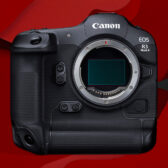
The R1 is Canon’s first flagship 1 series camera. Canon hit it out of the park with this camera. The 24.1MP sensor is the first mirrorless camera to feature cross-type autofocus. Cross-type solves some autofocus problems from standard autofocus systems when shooting vertically.
The Canon EOS R1 sets a new benchmark in autofocus performance. Along with the EOS R5 Mark II, Canon has equipped the R1 with the all-new DIGIC Accelerator processor. The new 64-bit ARM processor is responsible for moving the extreme amount of data coming into the camera, from the sensor, subject tracking, deep learning and reduced rolling shutter.
The development of the DIGIC Accelerator is one of the reasons that the EOS R3 was released as the top-of-the-line speed camera first.
The Accelerator is there to free the main DIGIC X processor to do the core image processing.
The EOS R1 has the fastest readout rolling shutter sensor on the market, albiet by a small margin over the Sony A1 sensor.
I also have to mention the 0.9x EVF. It’s stunning to look through.
Canon continues to evolve the ergonomics of their 1-series cameras. When you think that they can’t get any better, they do.
I don’t put a lot of stock into reviews of pretty much anything, they’re just opinions in the end. Sort of like this list.
Having used an R1 professionally for a while now, I don’t think a lot of reviewers ever used the R1 as it was intended to be used. If you didn’t have the use case or the time to put it through the paces, you’re going to miss a lot of things that make this camera a remarkable tool and technological achievement.
Canon EOS 40D

The xxD series of cameras began with the 6.3MP EOS 10D in August of 2004 and the series became a sales champion for the next 15 years. The line ended with the underrated, but poorly timed EOS 90D.
The EOS 40D was the pinnacle of the xxD lineup in my mind, and the true basis that led to the introduction of the EOS 7D series in 2009. The EOS 40D was announced in August of 2007 as a follow-up to the evolutionary EOS 30D.
Yes, the EOS 50D was announced in 2008, but in my opinion, it was a terrible camera.
The EOS 40D was the first mass market EOS DSLR, to come with Live View. It used the same system as the EOS 20Da which was for astrophotographers and Canon didn’t see a lot of “a” cameras. Live View became a great tool for landscape photographers and those looking for critical manual focus.
The 10.1MP sensor was terrific for the time. The resolution was great for both the EF-S and EF lenses. It also shot a blazing 6.5fps!
The EOS 40D introduced the sRAW file format to the world. sRAW still exists in modern cameras and I have never seen a visible difference when compared to RAW. You save some memory card space in the process, which was a bigger deal back in 2007.
The EOS 40D is the camera body that led me down the path to finally figuring out how to make photographs. I love this camera and bought another one a couple of years ago.
Canon EOS 5D

The Canon EOS 5D was the first “affordable” full-frame DSLR ever launched. Canon had reserved full-frame sensors to the EOS-1Ds lineup. It caught the Nikon world by surprise. Not even Nikon’s professional cameras had full-frame sensors, never mind a prosumer camera when the 5D launched in August of 2005. Nikon wouldn’t release their first full-frame camera until August of 2007 with the D3.
The EOS 5D came with a 12.7MP full-frame CMOS sensor. For those of us that started with digital cameras and had never used the out-of-reach financially EOS-1Ds, that giant optical viewfinder was a revelation.
Canon has released a lot of market changing cameras in its time, and the 5D was one of the biggest.
Canon EOS 70D

When the EOS 70D was launched in 2013, it didn’t move the needle initially. Canon had taken the xxD lineup in a different direction after the EOS 50D, which was one of the worst DSLRs Canon ever released. The 60D and 70D (and whatever the EOS 77D was) would now sit between the Rebel lineup and the EOS 7-Series cameras.
Why is the EOS 70D on this list? It was the first camera in Canon’s lineup to have the revolutionary Dual Pixel Autofocus (DPAF) system. This new autofocus technology greatly improved autofocus accuracy for stills and video in live view.
What is DPAF?
Each pixel on the CMOS imaging sensor has two separate, light-sensitive photodiodes, which convert light into an electronic signal. Independently, each half of a pixel detects light through separate micro lenses, atop each pixel. During AF detection, the two halves of each pixel — the two photodiodes — send separate signals, which are analyzed for focus information.
Then, an instant later when an actual image or video frame is recorded, the two separate signals from each pixel are combined into one single one, for image capturing purposes. This greatly improves AF speed over the majority of the area on which you’re focusing. The result is phase-detection autofocus, which surveys the scene and recognizes not only whether a subject is in focus or not, but in which direction (near or far), and by how much.
Yes, the EOS 70D appearing on this list will cause a double-take or two. Consider this the “clickbait” entry into the Top 10. DPAF was simply a top-shelf innovation and the 70D needs recognition for it!
Canon EOS 7D Mark II

Canon’s xxD lineup had been a huge success with cameras like the EOS 20D and EOS 40D, but it seems like they felt they could add a new line to their APS-C camera line-up. They were correct.
At the time, the EOS 7D had earned the internet moniker “baby 1D”. While the EOS 7D was a great camera, the follow-up was even better and became a massive succes, of which can still be felt today in some corners.
Canon launched the EOS 7D Mark II in September 2014 to a lot of fanfare. I don’t think is any APS-C camera from Canon since has brought the same level of enthusiasm from consumers. I am part of the hype machine and I still remember that feeling around that launch.
The 7D2 took APS-C to the professional level. The camera was equipped with the top end 65 all cross-type AF point system, which moved it forward from its predecssor by a large margin. Two card slots in a CF/SD configuration was a welcomed development and helped bring the camera into the true professional ranks.
The 7D Mark II was built like a tank and you could feel it when you had one in yours hands. It may have not been 1-series build quality, but it was close.
The EOS R7 has carried on the 7-series into the mirrorless world, but in my opinion, only in name.
Here’s hoping that Canon brings the next 7 series camera back to its roots, as a highly capable workhorse for anything that you throw at it.
Canon EOS 1Ds

In September of 2002, Canon became the first company to launch a full-frame CMOS sensor-based camera with the EOS-1Ds. It launched at a staggering $7999 USD in September of 2002. If we convert that to today’s dollars? That’s about $14,000. The EOS R1 feels like a bargain.
The year prior, Canon launched their first 1D series camrea with the EOS-1D. The EOS-1D wasn’t full-frame with its 4.1MP APS-H (1.3x crop) sensor, and it was also CCD and not CMOS. It did have a max burst rate of 21fps, which was crazy for the time.
The 11.1MP sensor was insane for the day and more than doubled the resolution from the EOS-1D. While it was a “slower” than the 1D in a lot of ways, it was still capable of shooting max bursts rates of 10fps.
This camera was targeted at professional news agencies, as the price was out of reach for most people. I would think that the 1Ds was also in some ways a halo product to show off what Canon was capable of in design and manufacturing.
Canon EOS D30

The Canon EOS D30 was the first DSLR that Canon built from the ground up. It was released in May of 2000 with a 3.1MP CMOS sensor and launched with a $3000 USD price tag. I’m not sure how many of these Canon sold, but it wasn’t for the masses, that came with the EOS Rebel 300D.
Prior to the D30, Canon had rebranded the Kodak DCS 520 as the EOS D2000 and the Kodak DCS 560 as the EOS D6000. So, the D30 was a big deal for Canon and Canon shooters when the partnership with Kodak ended.
Nikon ended their relationship with Kodak before Canon did with the launch of the D1 in 1999. Nikon did however stick with a CCD image sensor all the way until their first full-frame D3 camera in 2007.
Canon’s early R&D of CMOS sensors played a big role in Canon becoming #1 in market share in the early 2000s and that continues by a large margin today.
Canon EOS M

I didn’t put much thought into EOS M cameras, the first few were terrible and it became obvious that the line was never going to go anywhere. This was a misstep from Canon and in the end, had a negative impact on their customers.
The cream of the crop was the M6 and M6 Mark II. While there were other capable models like the M5, nothing fit together as well as the 6’s did. The M50 was a big seller for Canon and it was a nice package of well.
Then the EOS M50 Mark II came and told the world that EOS M was dead in the water.
My dislike of EOS M is greatly exaggerated. The demise was easy to see years before it became official and that was all I was rolling with.
I think EOS M is something Canon would like to have back. While they ended up making some very good EF-M cameras and lenses, it put consumers in a tricky spot and that hurt the brand and likely some adoption of the EOS R line.
Honourable Mentions

There are other camera models that could have appeared on this list, but I didn’t really want to do a top 15 or top 20.
I’ll give honorable mentions to the EOS 6D and EOS R6, the 6 series has been a bread and butter full-frame line of cameras for Canon.
Leaving off the EOS-1D X lineup was quite difficult. I shot extensively with the first two models in the series. Amalgamting the 1ds and 1d line into the X line was the correct business decision and we were given some of the best digital cameras ever made.
If I were to give a nod to the “best” DSLRs ever made, it’d be between the EOS-1D X series and the Nikon D8xx series. Both are still being used in droves today.
Leaving off the EOS 20D in favour of the EOS 40D was a hard choice, but I think the 40D took everything that was great about the 20D and made a far more polished and capable camera. Everything about the 40D just felt right.
I would also like to mention the EOS 5D Mark IV. It is a camera that is a sum of its parts, and it’s a terrific polished product that is used by thousands professionally to this day. I still recommend 5D4 to people that don’t want to leave EF.
I also have to give a shoutout to the original EOS R. While it was mostly an EOS 5D Mark IV in a mirrorless body with a quirky bar thing, it laid the groundwork for what would come the following year in the EOS R5 and EOS R6.
Disonourable Mentions

I won’t spend too much time on this, but Canon has released some stinkers in my eyes. I detested the EOS 5Ds and EOS 5Ds R. They were 5D4s with crappy sensors. These cameras never felt like cohesive products and more about winning some kind of megapixel war. They offered nothing new to the iconic “5” series line.
The EOS-1D Mark III is a camera Canon was more than happy to forget about. It was fundamentally flawed on the hardware side of things when it came to AF tracking. A capability that is important to the sports photographers that used 1D series cameras. Instead of trying to fix what was wrong with the camera after a few recalls, Canon released the EOS-1D Mark IV 2 short years later.
The EOS R7! Yes, people love the camera and it sells well. I have never felt that it deserved the 7-series name. I have the same feelings about the EOS 60D and how it compared to what came before it. I hope Canon brings a Mark II that changes my opinion. My opinion doesn’t sell cameras though.
We have beaten on the EOS R100 a lot here, no need to do it again. “Oops I did it again…”
Everyone has an Opinion
That’s my list, and there are some people that will think a few of these cameras don’t belong on the list. I don’t care what the list is, that is always going to be true. That’s part of the fun.
Here’s hoping Canon continues to innovate technology and influence the broader changes to the marketplace. They still have a ways to go to appease every type of shooter out there, but they’re well positioned to do so.
What camera and technology had an impact on you?
Header Image Credit: Patrick Langwallner on Unsplash


And R6 deserves more respect than it has now, as it is crucial along with R5 to stop most of the mid range Canon shooters jump to Sony(or other brands). Nikon did a huge mistake of making Z6ii Z7ii as a lame update. Z9 Z8 somewhat came out too late and not for the enthusiasts. Z5ii Z6iii are ridiculously late to the party.
Imho 6D R8 5Ds/5Dsr are honourable mentions.
I hated the cameras because of the sensor. It felt 10 years behind what Nikon was doing with the D8xx and those were also better cameras in almost every other way too.
Noticeable with the eyes how crappy the dynamic range was, especially in the shadows.,, and I'm not a DR evangelist. Anything with any level of dark to it looked terrible and printed terrible. There were no real software options that could clean them up at the time.
Resolving power was way too restricted to the lens that was on it. There was a lot of lenses in the EF lineup that were never going to do much with the added resolution, especially Canon's wide angle offerings.
These were half-assed cameras to get more margin out of the 5D4. I really haven't met anyone that liked them, including landscape shooters. Why anyone would have bought one of these over the 5D4 is beyond me.
350D -> 20D -> 5D -> 5D mkII -> 1D X -> R5
While I agree with most of the list, I do struggle with the inclusion of the 40D and of the 7D mkII and of the R1 as I do not think they were important nor revolutionary in any sense. Not that they are bad cameras, on the contrary. Just not real milestones.
It was a great camera, but I remember thinking when I first used live view, that SLR cameras were coming full circle and probably going back to range inder style of cameras. Add an evf and software based focussing and there you have the mirrorless format technology bed.
The Eos 300D was my first DSLR and a used a Sigma 12-24 as my UWA. The only Canon offering at the time was a 17-40L which wasn't very wide on a 1.6x crop.
The 20D was a legend, but a stop gap for me before the mighty 5D, my first full frame DSLR. Sure, pedestrian fps, awful rear lcd and very basic AF.
The 40D introduced me to live view and it was great when this was ported over to the 5DII.
The 7D was an amazing camera except for the very dissapointingly noisy sensor.
The 5DIII didn't offer anything revolutionary other than making the 5 series what it is today, pro build, just below the 1 Series. it had pro resolution, build, features and AF. Dual card slots too. The 5DIII paved the way for the R5.
These day's I use a pair of cams, a R6ii and a R5. I might upgrade my R5 later in the year fro a R5ii.
Weren't the R5/R6 launched in 2020?
In the 5D II section:
Did you mean June 2009?
Taking a look at cameras that have had a big impact in the industry and contrasting with our own paths is always fun. It's great to take a look at our trajectory and how cameras influenced us. I guess which cameras we had depended heavily on where we were in our lives at the time they were launched.
I mostly skipped film. I had a few cameras and took pictures in the 80s and 90s, but was in school and limited budget. It was only after grad school in the early 2000s that I started looking into photography. I started with the Canon PowerShot A20. I picked a Canon camera simply because my father shot canon and the vast majority of my childhood photos were shot on a Canon FTb.
My first DSLR was the
1000D/SX quickly sold and got the 450D/SXi
I took an intro to photography class at a community college with the SXi.
Then 550D/T2i when it came out in 2010. Followed by the 7D later that year, together with a used EF 70-200mm F4, my first L lens. I was into triathlons at the time and that was one of my main motivations.
The next camera was the 5D III in the first half of 2014. At that point I was motivated by taking kid's pictures. Gave the 7D to my brother and was shooting almost exclosively the 5D III. I really loved that camera (really regret selling it)! Started a collection of better glass 24-70 F2.8 II, EF 70-200mm III, Sigma ART 24, 50, 85, etc.
Stuck with the 5D III and spent less time on photography, mostly family pictures, until the R5.
The R5 was really a game changer! AF was unreal and the (i) animal AF; (ii) COVID providing more time at home; (iii) people with masks making for an uninteresting subject, got me into wildlife photography. A bit later, with my son growing, lots of youth soccer.
I must say, the R5 really had a phenomenal impact on me and got me back into photography in an aggressive way (with unbelievable amount of GAS).
I currently own:
R1, R5II, R7, R8, R10, R50 and R100
Have owned:
R3, R5, R6II, R, RP, M50 II
I own more lenses than makes sinse to own and far more than I care to admit. In my journey, the most impactfull were:
R5 - Mirrorless AF consistency (no MFA, 3rd party lens focus accuracy, etc) and AI AF were really game changers. Oh, and Electronic shutter (100% for me).
T2i - The one I spent most of my early learning time with and really got me into photography. Continued shooting with it even after the 7D.
5D III - My first Full-Frame. Game changer in IQ for me.
R3 - My first integrated grip camera and a game changer in terms of reliability and consistency for sports and events.
See: https://global.canon/en/c-museum/product/dslr783.html
See: https://www.dpreview.com/articles/0...mpus E-330 and,introduce just two years later.
Sauce: https://en.wikipedia.org/wiki/Canon_EOS_10D
Also, I should know: I bought the 10D in February 2004 at Fry's instead of waiting for the (more expensive) 20D body.